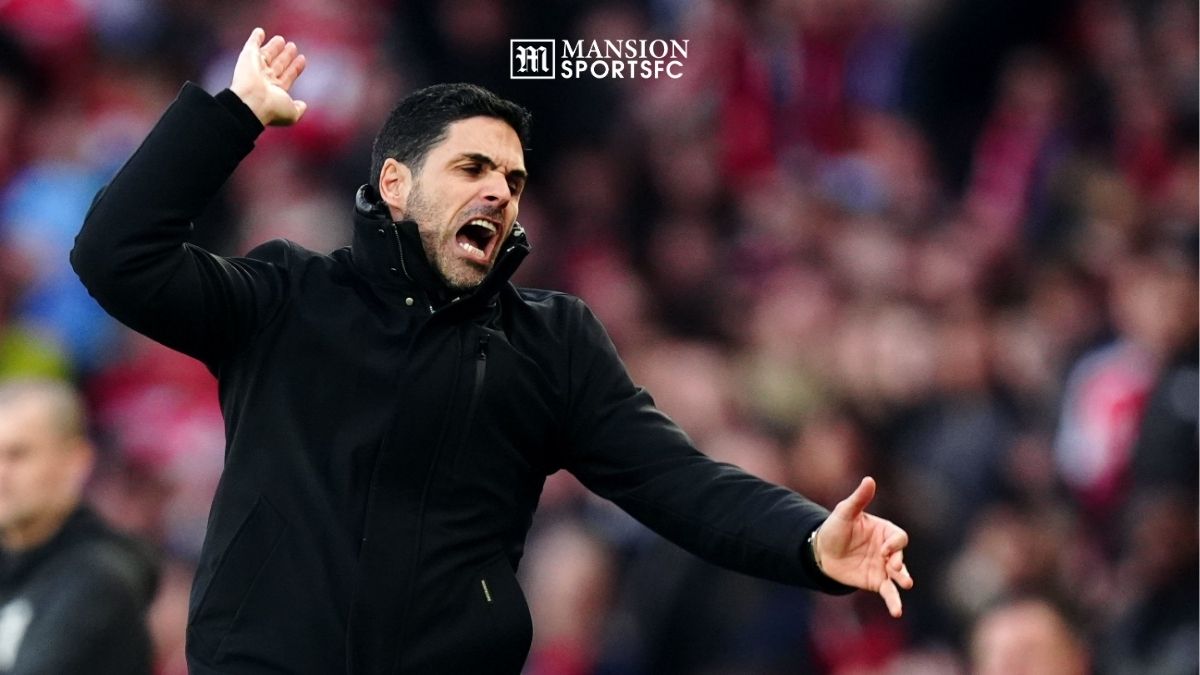
Mikel Arteta Disappointed as Arsenal Concede from a Set-Piece Situation in Draw Against Bayer Leverkusen
Mansion Sports – Mikel Arteta expressed his frustration after Arsenal had to accept a 1-1 draw against Bayer Leverkusen in a Champions League match.
The coach regretted the lack of urgency and focus from his team when conceding through a set-piece situation, an aspect of the game that usually becomes one of Arsenal’s main strengths.
Nevertheless, Kai Havertz’s penalty in the final minutes of the match ensured that this round of 16 duel remains open ahead of the second leg.
Arteta Highlights Costly Defensive Mistake
In the press conference after the match, Arteta conveyed his disappointment after Arsenal were only able to secure a 1-1 draw against Bayer Leverkusen in the first leg of the Champions League round of 16.
The away team’s goal was scored by Robert Andrich through a corner kick situation not long after the second half began. That moment prompted Arteta to highlight the team’s lack of attention and readiness, a weakness that is usually exploited by Arsenal when facing set-piece situations.
When discussing the defensive mistake, Arteta explained that there were two sides to that situation.
According to him, on one side the opponent managed to find that gap, while on the other side his team showed a lack of focus and urgency in two important moments.
He emphasized that the team had actually studied that pattern of play. He even stated that the players had been shown three clips of matches from the previous weekend that demonstrated similar situations in three different ways.
However, despite having been prepared, the team still was not ready to face that situation and ultimately conceded.
Havertz Returns with an Emotional Moment
Although struggling throughout most of the second half, Arsenal finally found an opportunity to equalize through Kai Havertz when facing his former club.
The striker from Germany calmly converted the penalty at the end of the match after a foul won by substitute player Noni Madueke. That goal ensured that the second leg match in North London next week will still be decisive.
Arteta expressed his satisfaction with Havertz’s composure in that crucial moment. He described that football often presents special stories.
Havertz’s return to that stadium after such a long time, with the background of once being part of that club, and then scoring a very important goal, according to him was a significant moment.
Arteta also added that emotionally the team understood what they had to do in that situation.
Substitution of Saka to Add Attacking Threat
The decision to substitute Bukayo Saka while the team was attempting to chase the equalizing goal had raised questions.
However, the tactical change ultimately produced a positive impact after Madueke succeeded in earning the penalty that became the turning point of the match.
Arteta explained the reason behind that decision by assessing that the team needed a different type of attacking threat to break through Leverkusen’s tight defense in the final phase of the match. He also praised the direct contribution provided by Madueke after entering the field.
According to him, Madueke demonstrated significant contribution and became a real threat to the opponent’s defense.
He emphasized that the player’s greatest ability is his bravery in facing one-on-one situations.
Arteta stated that having a player with such qualities is very important when the team needs a change in a match. He also expressed appreciation for the way Madueke utilized that opportunity.
Lack of Creativity in Arsenal’s Attack
Throughout the first half, Arsenal were actually able to dominate possession, but struggled to create effective final passes.
Arteta acknowledged that the players in the attacking line must improve their effectiveness if they want to progress further in this competition. He also mentioned the absence of the team captain, Martin Odegaard.
Arteta explained that Odegaard has different qualities compared to other players. However, he emphasized that the team still has many talented players.
According to him, execution in various game situations must be at a higher level. He added that the team should have been able to create greater threats around the penalty area, but on many occasions that did not happen.
He assessed that such a situation is part of the dynamics of football, and the team must be able to respond to it quickly. He also highlighted that after regaining the ball, the team instead gave too much space to the opponent.