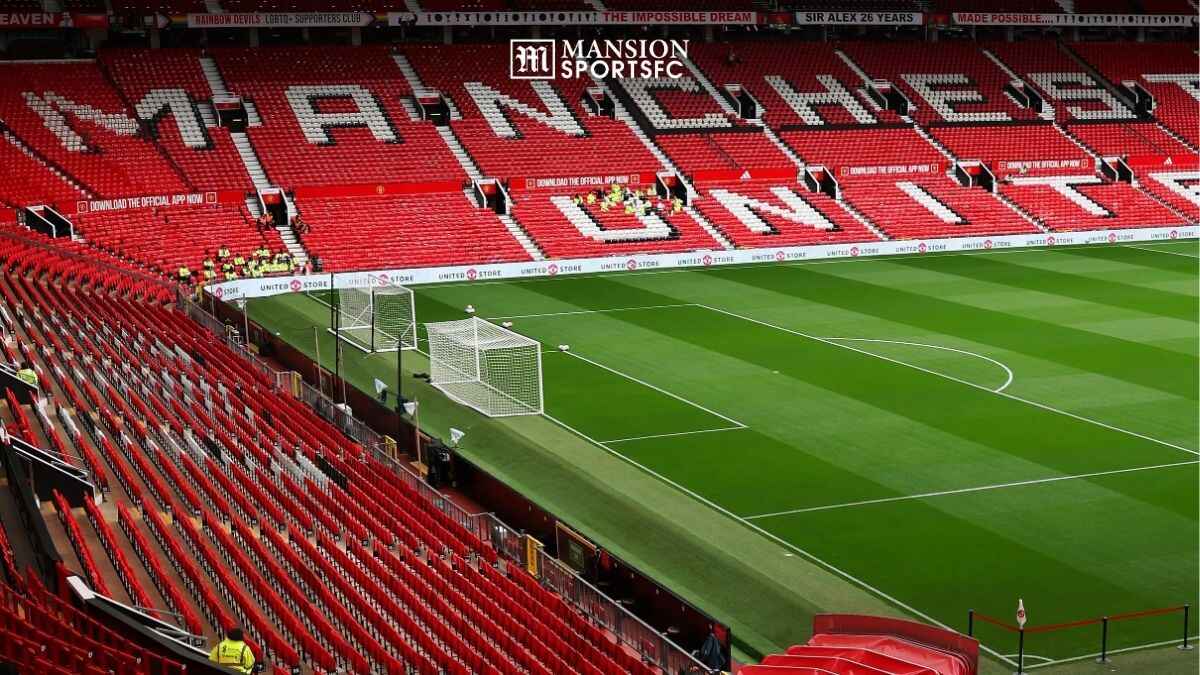
Manchester United Reveal £2 Billion Funding Plan for New Stadium
Mansion Sports – Manchester United have officially confirmed that the ambitious £2 billion project to build a modern 100,000-capacity stadium will be fully financed through private investment.
Unlike earlier discourse that mentioned the possibility of public funding support by minority owner Sir Jim Ratcliffe, the club has now outlined a clearer financial strategy to realize the stadium, which has been dubbed the “Wembley of the North.”
Private Funding for Stadium Development
Based on reports from various sources, Manchester United will continue with plans to build the large stadium without using public funds.
This shift in approach follows earlier statements that opened the possibility of using taxpayer money, which was subsequently rejected by the Mayor of Manchester, Andy Burnham.
Club representatives emphasized that the new stadium project will be entirely privately funded. In addition, the club continues to maintain positive communication with prospective investors and various related parties to ensure the smooth financing of the project.
Need for Government Support for Transport Infrastructure
Although the construction costs of the stadium will be fully borne by the club, Manchester United still hope for government support in developing transport infrastructure around the stadium area. This is considered essential to ensure the stadium is well integrated into the city system.
The club stressed that without adequate transport access, the magnificent stadium would not be utilized optimally.
Therefore, the request to the government is focused on support for infrastructure development and the revitalization of the surrounding area, not on financing the stadium construction itself.
Complex Land Negotiations and Project Timeline
Raising funds for a project of this scale presents its own challenges, especially with the club’s debt already approaching £1.3 billion.
In addition, Manchester United are also facing a complex negotiation process in their efforts to acquire additional land around the construction site.
One of the main obstacles is the ongoing deadlock in the purchase of a rail depot owned by Freightliner, particularly regarding valuation. This situation has made the construction timeline not yet fully certain.
The club explained that the stadium construction is expected to take four to five years.
However, before construction begins, an additional one to two years will be required to complete various preparations such as land acquisition, securing funding, and obtaining permits.
Economic Impact and Efforts to Restore Club Prestige
The push to realize this project has also been driven by the declining condition of Old Trafford, which was recently not selected as one of the venues for Euro 2028.
Instead, Manchester City’s Etihad Stadium was chosen, a decision that drew sharp criticism.
The construction of the new stadium is expected to restore Manchester United’s position as one of the elite clubs in the world. In addition, the project is projected to generate significant economic impact for the surrounding area.
The overall development of the area is estimated to create around 90,000 jobs and provide thousands of new housing units.
With strong interest from global investors, the club’s management remains optimistic that this historic project will proceed according to plan.