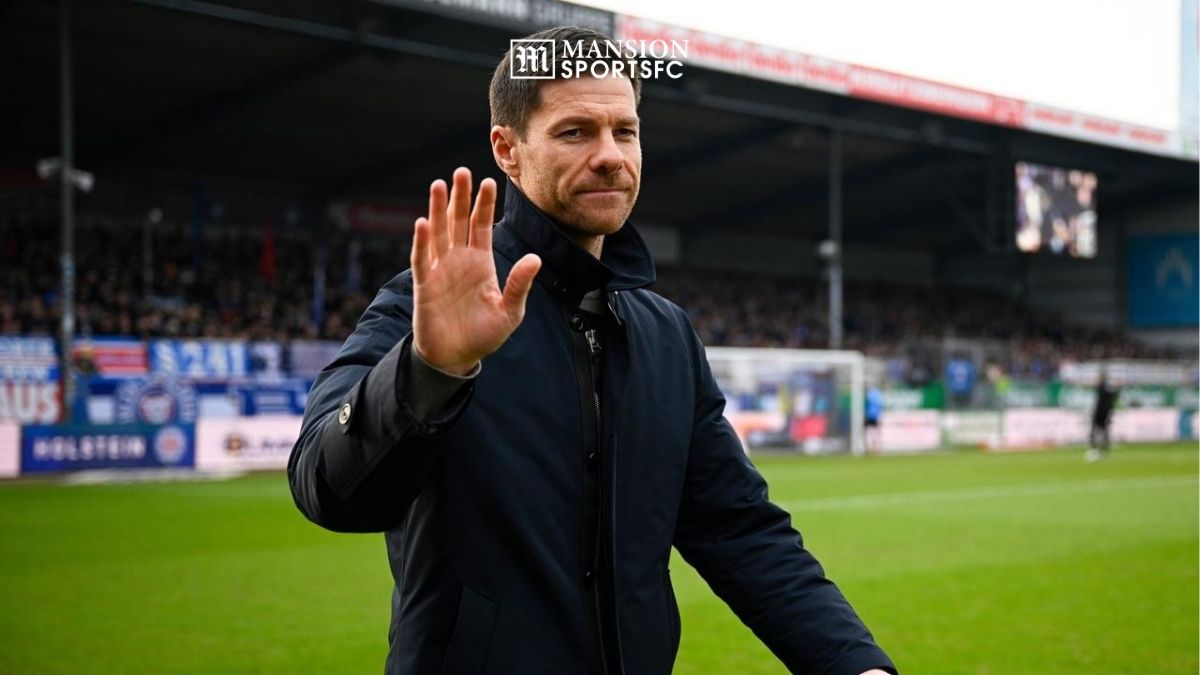
Xabi Alonso Reveals the Reasons Behind His Departure from Real Madrid
Mansion Sports – Shocking details behind Xabi Alonso’s sudden departure from Real Madrid have now emerged.
The coach was reportedly losing patience with his squad for months before eventually being dismissed.
In a moment of total frustration during a training session, the Basque tactician shouted at his players, “I do not know that I came to coach a nursery!”, a statement that marked the point of no return for his tenure at the Santiago Bernabéu.
Xabi Alonso’s Emotional Outburst During a Madrid Training Session
Although Alonso’s era at Real Madrid officially came to an end this week following defeat in the Spanish Super Cup, reports emerging from Spain indicate that emotionally he had given up much earlier.
According to Marca, the “divorce” between the former Bayer Leverkusen coach and Los Blancos’ star-studded dressing room had been evident since early November, hidden behind the walls of the Valdebebas training complex.
The tension that continued to simmer due to clashes of coaching style and personality eventually reached its peak during a routine training session. It was at that moment that Alonso, usually known for his calm demeanor on the touchline, lost control.
Facing players whom he believed were ignoring instructions and failing to show the required intensity, he delivered the biting remark.
Sources state that the outburst was not a standard motivational tactic or a brief emotional release intended to provoke a reaction.
The incident was described as a “shout of desperation” born out of exhaustion and frustration.
Alonso felt worn down by what he perceived as childish behavior from the players, who responded with whispers, negative attitudes, and a reluctance to accept the high demands of his coaching philosophy.
Tactical Burden and Training Sessions Deemed Too Demanding
The root of the conflict lay in fundamental differences over how the team should be prepared. Alonso, known for his highly detailed tactical approach, arrived in Madrid determined to implement a complex, high-intensity system similar to the one that led him to an unbeaten Bundesliga title.
However, the Real Madrid squad, accustomed to a more fluid and flexible style under Carlo Ancelotti, resisted these methods.
Players reportedly considered Alonso’s training sessions to be “too demanding.” Widespread complaints emerged in the dressing room regarding the “excessive volume of information” they were required to absorb on a daily basis.
They felt stifled by overly detailed instructions and constant corrections, which were perceived as a form of excessive supervision.
This dissatisfaction also extended to Alonso’s coaching staff, particularly his assistant, Sebas Parrilla.
The excessive enthusiasm shown by Alonso and Parrilla in instilling tactical instructions and correcting every minor mistake only served to further alienate the players.
Too many voices issuing commands and monitoring every movement created a toxic daily working environment, in which the enjoyment of training was replaced by friction and fatigue.
A Race Against Time That Alonso Did Not Win
From Alonso’s perspective, the intensity was not a choice, but a necessity. He felt he was racing against time.
After the Club World Cup, the squad returned with virtually no preseason, leaving Alonso with no opportunity to instill his playing identity before official competitions began.
He believed there were major structural issues that needed to be addressed and felt the team was still far from the level required to compete for major titles.
As a result, he sought to accelerate the learning process by using every minute of training sessions to introduce new concepts.
However, this sense of urgency clashed with a squad that was not prepared to accept such a strict training regime.
The breakdown in the relationship became total. Alonso was disappointed by the players’ commitment, while the players felt overwhelmed by Alonso’s intensity.
The two sides were no longer aligned, and as daily routines grew increasingly demanding, the relationship collapsed.
Alonso felt he was dealing with “spoiled” behavior, while the players felt they were being treated like robots rather than elite athletes.
The Growing Shadow of Arbeloa at Valdebebas
The situation was further complicated by the increasing presence of Álvaro Arbeloa. Long before Alonso was officially dismissed, the name of the Real Madrid Castilla coach had begun circulating within the first-team dressing room as a potential solution.
Arbeloa was frequently seen observing first-team training sessions, a common practice for the B-team coach, but one that took on a different meaning as tensions escalated.
Whether the club was subtly testing options or the players themselves were beginning to take notice and favor his potential leadership, a “rumor” began to grow.
The squad started to view Arbeloa, a figure deeply rooted in the club’s culture and a former teammate of many legends, as an antidote to what was seen as Alonso’s overly rigid regime.
When the results crisis eventually arrived, the foundation of the relationship had in fact been fragile for some time.
Although the players briefly agreed to try to salvage the situation as performances declined, the emotional bond with Alonso had already been severed and could not be restored.